
Understanding Deepfakes: What Older Adults Need to Know
9 min read


Related Topics
“Deepfake” is a buzzword of the moment, driven largely by rapid advances in artificial intelligence (AI) technology. Whether it’s through impersonating celebrities, public figures, or even family members, deepfakes are making it easier for criminals to carry out deceptive schemes of all kinds.
What are deepfakes?
Deepfakes are AI-generated videos, photos, and audio that fabricate or alter someone’s likeness—often to a shockingly realistic degree. These heavily manipulated pieces of digital content can make it appear a person has said or done something they never did.
While sometimes used for fun or entertainment, deepfakes are increasingly being used for more malicious purposes—such as misinformation and scams. Deepfake scams pose an especially grave threat to older Americans. In 2025, people age 60+ filed more than 200,000 fraud complaints, with losses totaling $7.7 billion, according to the FBI’s Internet Crime Complaint Center (IC3).1
Deepfake technology is becoming more sophisticated by the day, making it harder to tell what’s real from what’s fake. In a recent Quinnipiac University poll, 42% of participants were either "not so confident" or "not confident at all” that they could spot AI-generated videos or audio recordings. And nearly 3 in 10 people said they had shared a video before realizing it was created using AI.2
What are some common deepfake scams to look out for?
Below are six common and growing types of deepfake scams:
1. Investment scams
When 82-year-old Steve Beauchamp saw a video of billionaire Elon Musk promoting a high-return investment opportunity, he eagerly hopped on board. Within several weeks, Beauchamp had lost more than $690,000 of his retirement savings to digital scammers, who had used AI tools to create a convincing deepfake of Musk.
Deepfakes can be used to impersonate financial experts or famous investors promoting fake investment opportunities. Once a person invests, the criminals disappear into thin air, leaving a trail of financial devastation in their wake.
2. Romance scams
You’ve probably heard of people meeting someone online and getting caught up in a whirlwind romantic courtship, only to discover their love interest is a con artist. Now, with deepfake technology, scammers can create even more convincing fake personas using face-swapping tools and AI-altered photos. These criminals assume a fake identity, nurture a personal connection with their target, and eventually, ask for money (usually in the form of online payment apps, bitcoin, or gift cards). In Hong Kong, for instance, a romance scam using AI deepfake technology lured victims into giving more than $46 million to a group of scammers.
3. Deepfake doctor scams
If you frequent social media sites like Facebook or Instagram, you may have seen videos of medical professionals promoting health products like supplements or GLP-1 weight loss alternatives. And maybe you thought nothing of it. But the chances are good that the “doctor” you saw was an AI fabrication and not a real health care professional at all.
In a recent piece for STAT, American Medical Association CEO John Whyte warned of the growing problem of deepfake "doctors." Scammers are increasingly using AI to copy the faces and voices of real doctors without their permission. They then use these realistic “deepfake” videos to promote questionable supplements, counterfeit weight-loss products, and other snake-oil remedies. In some cases, doctors have reported that their name and likeness were being used without their consent to hawk alleged "cures" for diabetes and other chronic medical conditions.
4. Political scams
In 2025, scammers reportedly used AI to create a deepfake impersonation of Secretary of State Marco Rubio. They then attempted to use this realistic persona to contact foreign officials and U.S. political leaders through text messages, voicemail, and the Signal messaging app.
A similar incident occurred in 2024, when New Hampshire residents received a strange robocall from someone who sounded like President Joe Biden, telling them not to cast their ballot in the state's presidential primary. Turns out, the voice was not Biden’s at all; it was generated using AI.
These are just two examples of how deepfake technology is being used to create bogus videos or audio clips of political figures, potentially spreading dangerous misinformation or manipulating public opinion.
5. Extortion scams
With this type of deepfake scam, scammers use AI technology to mimic the voice or appearance of a family member, claiming they are in urgent trouble.
One particularly devious extortion scam is known as the “grandparent scam,” which typically targets older adults over the phone. Using special voice cloning technology, criminals impersonate a grandchild or other family member. They tell the relative they're in some kind of serious legal trouble and need money quickly. In 2025, Americans reported $5 million in losses to these "distress" scams.3
6. Celebrity endorsement ad scams
Earlier this year, Michigan Attorney General Dana Nessel warned about bogus investment schemes on Meta platforms like Facebook. Scammers may post fake investment ads on these platforms using the names or images of well-known financial personalities like Kevin O'Leary without their consent. These ads often promise exclusive investment opportunities and guaranteed high returns to lure unsuspecting victims.
After someone clicks the ad, the scammer tries to move the conversation to an encrypted app like WhatsApp. The person may then be added to fake investment group chats filled with false testimonials and “expert” advice—all designed to pressure them into buying stocks or cryptocurrency that ultimately lose value after scammers cash out.
This and other product ads featuring celebrity deepfakes can prompt people to buy fraudulent or non-existent products, losing money and even sensitive personal data in the process.
How can I identify a deepfake video, photo, or audio clip?
Detecting a deepfake video or image isn’t always easy, but there are some key signs to watch out for.
With videos, look for:
- Unnatural body posture or facial movements (e.g., not blinking enough or blinking too much)
- Inconsistent or unnatural placement of reflections (e.g., in eyes and/or glasses) and shadows
- Out-of-sync audio between voice and mouth
- Blurred mouth or chin area
- Excessive pixelation or jaggedness of images
- Skin (especially on cheeks and forehead) that looks unnaturally smooth or overly wrinkled; also check whether the skin matches the apparent age of the person’s hair and eyes
- Discontinuity across the clip (such as a person’s tie color changing inexplicably)
With photos, look for:
- A glossy, artificial, or “too perfect” look
- Features that appear slightly “off” or artificial, such as distorted legs, extra or webbed fingers, or a facial structure that doesn’t look quite right
- Distorted, illegible text and numbers
- Facial skin color that doesn’t match the rest of the body
With audio, look for:
- A robotic or “flat” tone of voice that sounds too perfect or lacks the natural conversational fluctuations of a human speaker
- No background noise, or unnatural sounding background noise
How can I protect myself from a deepfake scam?
In addition to watching out for the signs above, it’s a good idea to practice healthy skepticism and adopt these smart habits:
- Limit the personal information you share online: Avoid sharing too much about yourself on social media platforms. Scammers can weaponize this information to create more convincing deepfakes.
- Confirm identities: If you receive an unexpected call from someone asking for personal information (e.g., your Social Security number) or requesting money, be very cautious. Hang up and call that person directly using a reliable method (such as a phone number from a company’s official website). If this person claims to be a family member, ask them a question only the real person could answer, or hang up and call them back using their known phone number.
- Verify the source: If you see a surprising video or image online, verify its authenticity through reputable news sources or official channels. You can also visit sites like FactCheck.org and PolitiFact, which are independent sites focused on debunking misinformation.
- Pause and think: "Any content you see online that makes you feel a strong emotion - anger, fear, disbelief - is a red flag," said Lynette Owens, VP Global Consumer Education & Marketing at Trend Micro. "Whether it is a deepfake scam or misinformation, there's a moment where you should pause and think before believing and replying right away." If you see a photo or video or you’re talking to a person and something feels "off," it probably is. Instead of giving in to your emotions, take a moment to verify that what you’re seeing or hearing is actually true.
- Be skeptical about “miracle” products: Practice caution when you see videos on social media promoting “miracle cures” or products not prescribed by your doctor or sold through a trusted pharmacy. If something seems questionable, contact your doctor’s office directly or ask your provider about it during your next appointment.
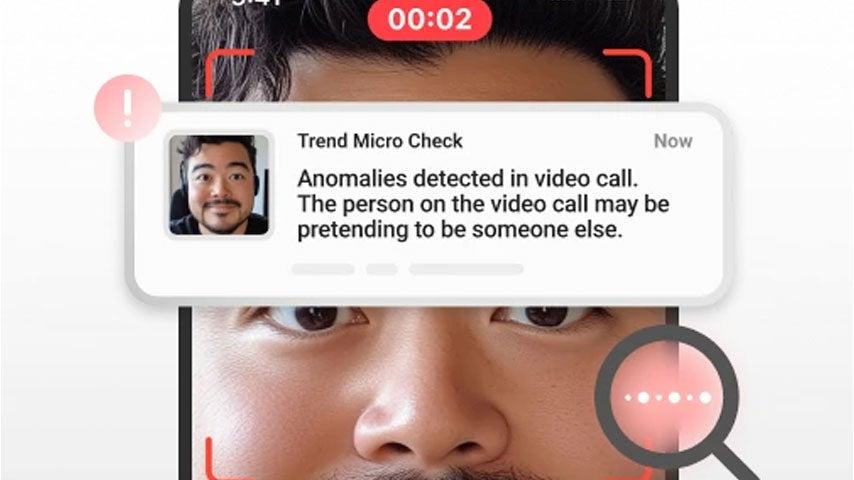
- Use the latest deepfake detection tools: Is there a way to detect deepfakes? Mobile apps like Trend Micro Check from Trend Micro (available for download on the App Store and Google Play) can help you verify if the media you’re looking at is real or manipulated, giving you more confidence as you navigate the digital world.
What should I do if I’ve been targeted by a deepfake scam?
If you believe you’re the target of a scheme or you’ve fallen for a deepfake scam, take immediate action:
- Protect your financial accounts: Notify your banks and credit card companies that you may have been scammed. Change any compromised passwords and enable two-factor authentication to secure your online accounts.
- Contact authorities: Report a suspected deepfake scam to law enforcement or agencies like the IC3, Federal Trade Commission (FTC), or your local consumer protection office.
- Tell people you know: Encourage your friends, family, and neighbors—especially older adults—to learn about deepfake scams. That way, they, too can take steps to protect themselves.
Sources
1. Federal Bureau of Investigation (FBI), Internet Crime Complaint Center (IC3). Internet Crime Report 2025. Found on the internet at https://www.ic3.gov/AnnualReport/Reports/2025_IC3Report.pdf
2. Quinnipiac University Poll. The Age Of Artificial Intelligence: Americans' AI Use Increases While Views On It Sour, Quinnipiac University Poll On AI Finds; 7 In 10 Think AI Will Cut Jobs With Gen Z The Most Pessimistic. March 30, 2026. Found on the internet at https://poll.qu.edu/poll-release?releaseid=3955
3. Federal Bureau of Investigation. Internet Crime Report 2025. Found on the internet at https://www.ic3.gov/AnnualReport/Reports/2025_IC3Report.pdf
AI Scams Education Made Possible By
Detect AI Scams
Use Trend Micro Check to scan for AI face-swapping scams during video calls and get real-time alerts to a potential impersonation attempt. Stay ahead of deepfakes.