
The Best Medical Alert Systems with Fall Detection of 2026
We tested medical alert systems with fall detection to help you decide which is best for your needs.

- Medical Guardian is the Best Overall medical alert system with fall detection because of its reliable and accurate performance.
- Medical alert systems with fall detection have a starting monthly cost of about $20–$34, plus an extra $10 per month for fall detection functionality.
- When shopping for medical alert systems with fall detection, be aware of extra fees, like equipment and activation fees.
- Original Medicare won’t cover the cost of a medical alert system, but Medicare Part C or some Medicare Advantage plans may cover some or all of the system’s cost.
At NCOA, we take the time to research, test, and recommend products that can help you live a healthier life. We’ve spent more than 3,000 hours researching medical alert systems to give you the most accurate product reviews. To find the best medical alert systems, we:
- Consulted with doctors and licensed adult caregivers who specialize in working with older adults
- Put more than 35 devices through a series of 16 different tests at our in-house lab
- Mystery shopped more than 15 brands
- Surveyed more than 1,000 medical alert system users and caregivers
- Interviewed experts on older adults falls risk
- Worked with older adults to test medical alert systems and get their opinion
- Read thousands of verified customer reviews
We’re constantly testing new medical alert systems to give you the most accurate and up-to-date recommendations. Read more about our medical alert system review methodology.
Falls are a significant health concern, especially for older adults, but there are ways to reduce your risk. One in four older adults falls each year in the United States, and more than half of all falls take place at home. Factors like muscle strength and vision can increase the risk of falling; staying physically active can help reduce that risk. And using the proper tools to maintain your safety, whether it's a medical alert device or a top stair lift, can make a big difference.
Medical alert systems with fall detection can also help increase your safety as you age at home, and research indicates that these systems can even make people more active around the house.1 Systems with fall detection may be ideal for people who have fallen before, have had a “long lie” where they fell and spent a long time on the ground because they were unable to get up, have health or mobility issues, and who want to age in place.
There are many medical alert systems to choose from, which is why we thoroughly tested some of the most popular models. We evaluated factors including the system’s price, fall detection accuracy, response time, and more. Then, we identified the best medical alert with fall detection to help you decide which system is best for your needs.

Best Overall
Medical Guardian
Fast fall detection response time, long battery life, and accurate GPS tracking
NCOA exclusive discount
Free equipment on the MGMini with the code: NCOAFREE
Best customer service
Bay Alarm Medical
Friendly, helpful staff at every step, low starting cost, and lots of device options

Best Value
MobileHelp
Zero activation or equipment fees, low starting monthly cost, and long battery life
NCOA exclusive discount:
Free month of service and savings of up to $230 with code: SAFE4FREE
Our picks for the best medical alert systems with fall detection:
- Medical Guardian: Best Overall
- Bay Alarm Medical: Best Customer Service
- MobileHelp: Best Value
- LifeFone: Longest Battery
Comparing the best medical alert systems with fall detection of 2026
| Comparison Features | ||||
|---|---|---|---|---|
| Our rating (out of 10) | 9.9 |
9.8 |
9.7 |
9.4 |
| Falls detected | 3/3 |
3/3 |
3/3 |
2/3 |
| Avg. Response Time* (seconds) | 52 |
48 |
62 |
49 |
| Max Battery Life (Days) | 5 |
3 |
6 |
10 |
| Warranty | Limited, can add protection plan for an extra monthly fee |
Limited on equipment, can add protection plan for an extra monthly fee |
Limited, can add protection plan for an extra monthly fee |
Limited, can add protection plan for an extra fee |
*Response times can vary based on connectivity type, location, and more. We consider an average fall detection response time of less than 90 seconds as passing the test. These response times are from test falls—not pressing the help button.
Our reviews of the top medical alert systems with fall detection
Medical Guardian: Best Overall
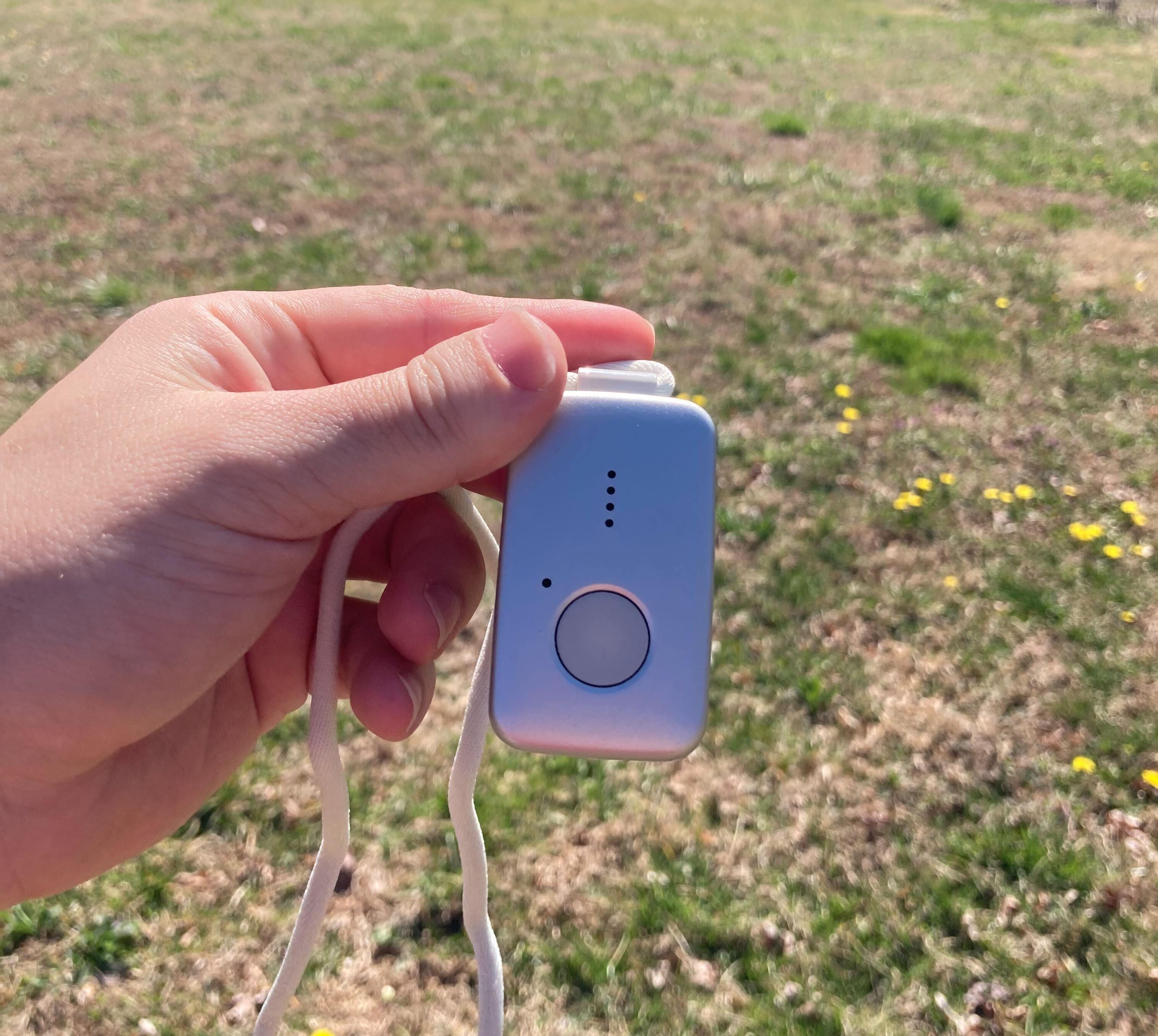
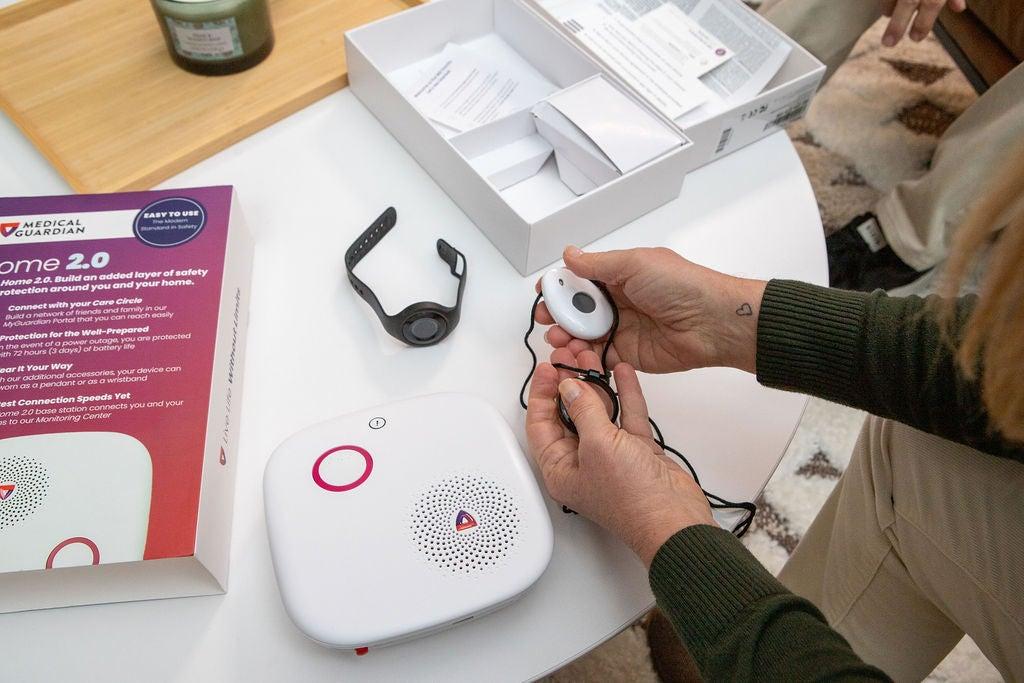
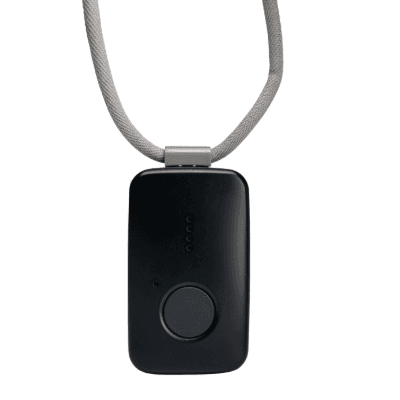
We chose Medical Guardian as our Best Overall medical alert system with fall detection because of its reliable performance and versatile products. The MG Move and MG Mini Lite detected all three fall tests and had highly accurate GPS tracking results. The devices were also easy to unbox, set up, and move, making for an overall user-friendly experience.
Medical Guardian
Best OverallNCOA exclusive discount
Free equipment on our MGMini with the code: NCOAFREE
NCOA exclusive discount
Free equipment on our MGMini with the code: NCOAFREE
- Medical Guardian Review
- Falls detected: 3/3
- Avg. fall detection response time: 52 seconds
- Max. in-home device range: 1,400 feet
- Max. battery life: 5 days
- GPS tracking: Yes
- App available: Yes
- Contract required: No
Pros
- Accurate fall detection
- Good average response time (52 seconds)
- Easy unboxing and assembly
- Clear call quality
- Accurate GPS tracking
- Long battery life (up to five days)
Cons
- Most expensive on this list
- Charges one-time equipment fees ($149.95–$199.95)
- No way to cancel a call before operator answers
- No free trial period
Bay Alarm Medical: Best Customer Service
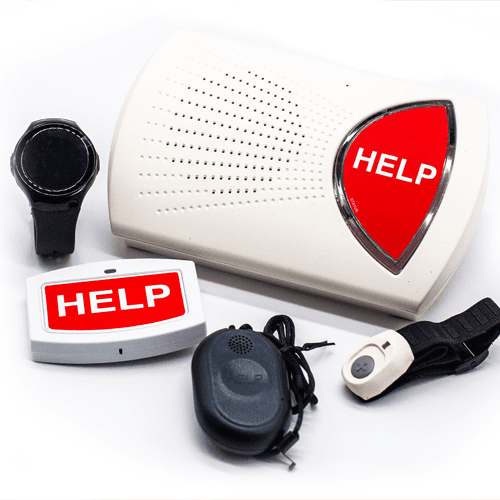
We chose Bay Alarm Medical as the Best Customer Service medical alert system with fall detection because we had great interactions with staff when testing the devices. Bay Alarm Medical and Medical Guardian are the only brands on this list with customer service available seven days per week at normal hours. Bay Alarm Medical also ties with Medical Guardian as the only brands offering customer service by phone, email, and chat.
- Bay Alarm Medical Review
- Falls detected: 3/3
- Avg. fall detection response time: 48 seconds
- Max. in-home device range: 1,000 feet
- Max. battery life: 6 days
- GPS tracking: Yes
- App available: Yes
- Contract required: No
Pros
- Very positive interactions with call center staff
- Easy and simple installation process
- Low starting monthly cost
- Impressive device variety
Cons
- Charges one-time equipment fees from $149–$199
- Shorter maximum battery life (only three days)
- No free warranty
MobileHelp: Best Value
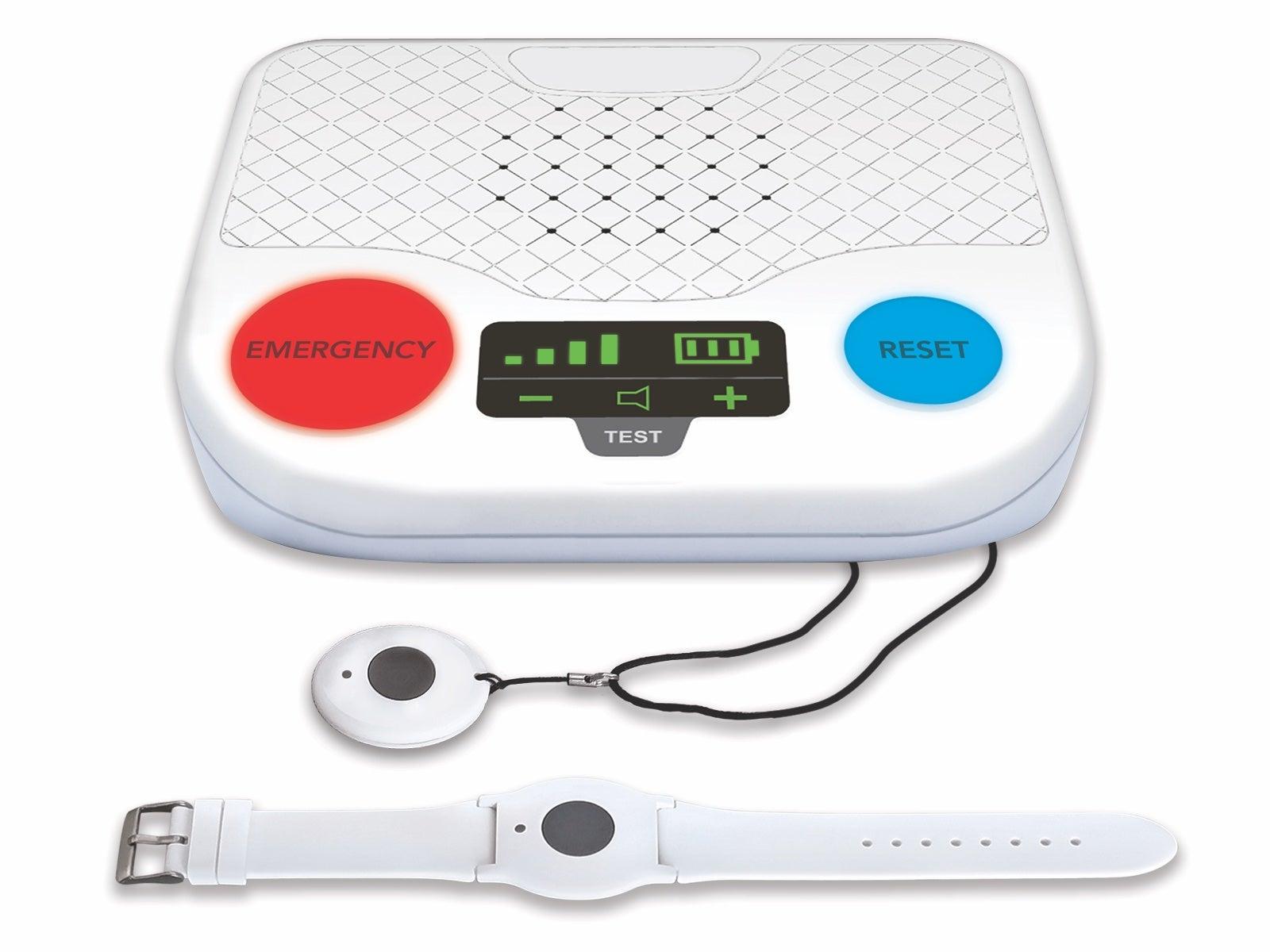
We chose MobileHelp as the Best Value medical alert system with fall detection because its starting monthly price of $25.95 is one of the lowest on this list. MobileHelp is one of only two devices that don’t charge any added fees; the other is LifeFone. MobileHelp has an edge because its least expensive device costs $5 less than LifeFone. And MobileHelp detected all three test falls, while LifeFone detected only two of the three test falls.
MobileHelp
Best ValueNCOA exclusive discount:
Free month of service and savings of up to $230 with code: SAFE4FREE
NCOA exclusive discount:
Free month of service and savings of up to $230 with code: SAFE4FREE
- MobileHelp Review
- Falls detected: 3/3
- Avg. fall detection response time: 62 seconds
- Max. in-home device range: 1,400 feet
- Max. battery life: 4 days
- GPS tracking: Yes
- App available: Yes
- Contract required: Yes, three-month agreement
Pros
- One of the lowest starting monthly costs on this list
- No set up or equipment fees
- Necklace help buttons are adjustable
- Longer battery life (four days)
Cons
- Device didn’t connect right away and needed a software update
- The package might be difficult for those with limited dexterity to open
LifeFone: Longest Battery
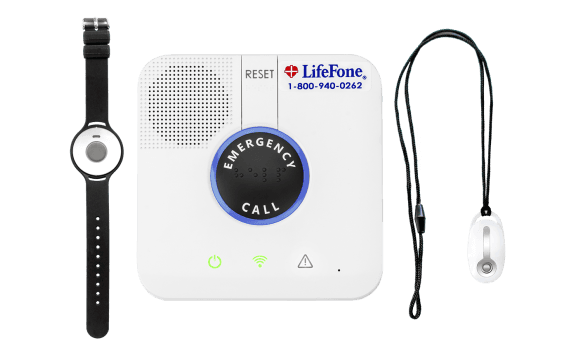
We chose LifeFone for the Longest Battery Life because it not only has the longest battery life on this list (10 days) but also has one of the strongest batteries we’ve seen on the market. The At-Home and On-the-GO VIPx has a battery life of up to 10 days, which is double that of Medical Guardian and Medical Alert, which tie in second with a five-day battery life. Battery life can be particularly important in a medical alert system if you’re traveling, are unexpectedly away from an outlet, or simply forget to charge the device. Plus, Lifefone’s monthly fall detection cost is just $5, half the average of $10.
- Learn more in our Lifefone Review
- Falls detected: 2/3
- Avg. fall detection response time: 49 seconds
- Max. in-home device range: 1,300 feet
- Max. battery life: 10 days
- GPS tracking: Yes
- App available: Yes
- Contract required: No
Pros
- Strong battery life (10 days)
- Long 1,300-foot device range
- Lowest fall detection cost of $5 per month
- No equipment or activation fees
Cons
- Wearable devices feel bulky
- There are no options to improve the appearance of the wearable devices
- An optional caregiver app costs $8 per month
- Wearable devices lack a two-way speaker
Other brands to consider
Unaliwear
Unaliwear makes a very sleek smartwatch medical alert system that has some desirable features, such as the option to set medication reminders and a limited lifetime warranty. You can also change the fall detection sensitivity to help prevent false alarms.
While fall detection is included in the monthly fee, the lowest starting monthly price of $80 is very expensive. And Unaliwear charges a one-time equipment fee of $299. We find Unaliwear to be too expensive for the value it offers.
Apple Watch medical alert
The Apple Watch includes many helpful accessibility features. VoiceOver is a screen reader that can tell you what’s happening on the watch, even if you can’t read the screen. Zoom can magnify the screen up to 15 times its size. The Apple Watch can play audio to both ears, so you can adjust the balance to hear the sound better if you have hearing loss.
While we like the accessibility features, the Apple Watch performed poorly in our fall detection testing. It can only detect hard falls, and our research shows that most older adults experience a mix of soft and hard falls.
How does fall detection work?
Automatic fall detection uses a monitoring device that registers when you fall and can automatically call for help if you’re not able to. Medical alert systems with fall detection devices often feature a necklace or a wristwatch that you need to wear. The device identifies falls by using a mix of the following:
- Accelerometers (detect speed)
- Barometers (detect pressure)
- Algorithms (differentiate between real falls and false alarms)
Once the device detects a fall, it calls the monitoring center and may connect you to your caregivers so you can get the help you need. According to research, fall detection devices take the raw fall data and uses machine learning, deep learning, and artificial intelligence to identify fall events.2
That study also indicates that more researchers are focusing on fall detection each year, and the number of papers available on fall detection has grown from less than 1,000 in 2011 to more than 4,000 by 2022. Such an interest in fall detection is promising and may mean that we start to see new and more accurate fall detection technology available.
Types of fall detection devices
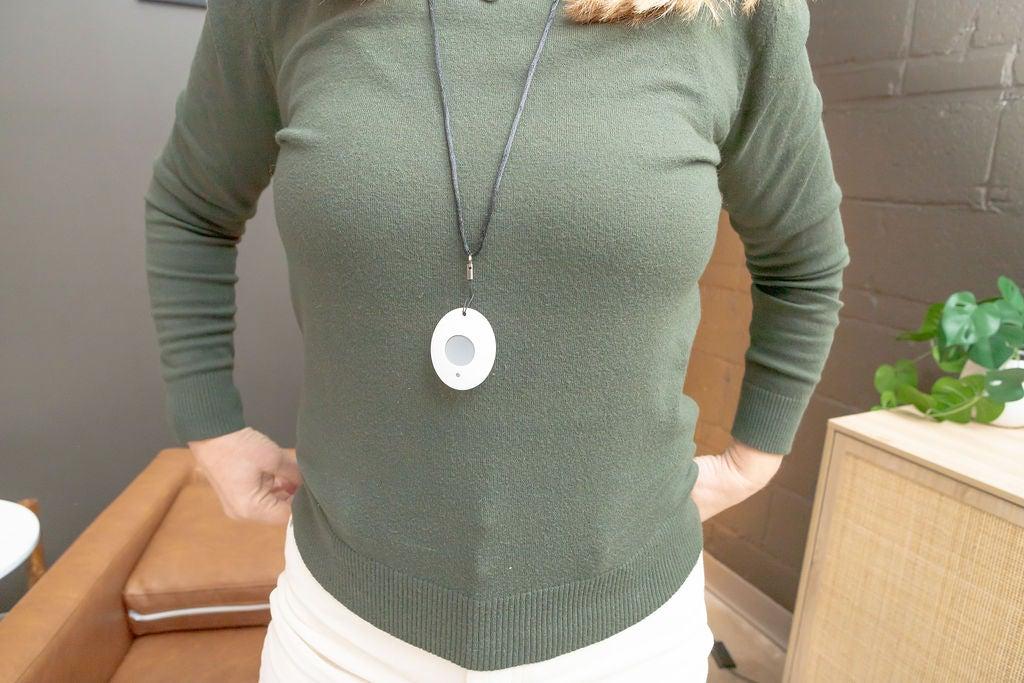
When you shop for a medical alert system, you can choose from many types of fall detection wearable devices. Medical alert buttons can be worn around your neck or clipped onto a belt. And there are also lots of medical alert watches with fall detection capabilities, including more basic models and smartwatches.
Watches with fall detection can be appealing because they may look less like a medical device. But research has found that watches or devices worn on the wrist aren’t as accurate as those worn on a belt or necklace.3 That’s because natural arm movements can signal false alarms in devices worn on the arm.
Ambient sensors can also be positioned in your home to recognize a fall and signal the medical alert system that you need help. These sensors are limited to use indoors. If you’ll be walking or gardening outside, you will need a wearable device when you’re away from home.

How accurate is fall detection?
No fall detection is 100% accurate, and all medical alert systems include a disclaimer stating this.
Fall detection can’t be entirely accurate because we only have lab data on falls, and we need extensive real-world falls data for complete accuracy. Getting that much real-world fall data would be a huge undertaking, and one review estimates that collecting real-world data for just 100 falls would require at least 100,000 hours of data.4
While fall detection isn’t completely accurate, we do have information on which types of fall-detection wearable devices are most accurate. One study found that chest-worn fall detection devices had 98% accuracy.5 Another review of studies found that the most effective sensors were placed on the body’s trunk, foot, or leg, but data about the specific accuracy of devices varied significantly between different studies.6
Fall detection may not always be 100% accurate, but it’s still a worthwhile investment in safety and can give you, your caregiver, or the person in your care peace of mind.
Fall detection false alarms
False alarms and missed falls may happen, since fall detection devices aren’t 100% accurate. According to one research paper, when a commercial system was tested by 18 people over four months, 83 of 84 reported alarms were false. Accuracy also depends on the type of device you use and its sensitivity.7
If you experience a false alarm while using a medical alert system, tell the dispatcher. Don’t be afraid of accidentally triggering the alarm, since the monitoring center staff know false alarms will happen. Companies also encourage you to test your device so you’re comfortable with the process, and you can simply tell the dispatcher you’re testing it when they respond. Check out our Lively medical alert review for another option with a live, friendly monitoring center.
Medical alert systems with fall detection costs
Medical alert system subscriptions start at around $20 per month but can cost $50 or more. Fall detection usually costs about $10 more per month. Your monthly monitoring costs are essentially a subscription fee, and you pay it to keep your device connected to the monitoring center. Many medical alert systems offer discounts for paying those costs quarterly or annually.
When paying for a medical alert system, look out for these extra costs:
- Fall detection: Fall detection is an extra subscription that usually costs about $10 per month, but it can vary. The best medical alert systems with fall detection that we reviewed charged from $5–$11 per month for fall detection.
- Protection plan: If your system equipment is lost, stolen, or damaged, you can be responsible for the cost of replacing it. Some systems can cost as much as $300, but you can often buy a protection plan, which acts like an extended warranty. These plans typically cost between $5–$7 per month.
- Caregiver app: Some devices feature caregiver apps that allow you to add caregiver contacts. When you add someone as a caregiver, they’ll receive notifications when something happens, like your system registers that you’ve fallen. Some apps even give caregivers the ability to track your location and activity and communicate with you through the app. These apps are usually free but sometimes cost a few dollars per month.
- Surprise fees
- Equipment: Some companies charge you equipment fees when you actually buy the device. Depending on the company and the device, you might be “leasing” the device or buying it outright. Check out our Alert1 review for an option with no equipment fees.
- Activation: When you first start the service, you may need to pay an activation fee. These fees can range substantially and could cost anywhere from $75– $200. To check for these fees, pretend to purchase a device by adding it to your shopping cart. Once you get to the final purchase page, you’ll see a breakdown of costs, including any equipment or activation fees.
Costs for medical alert systems with fall detection
| Comparison Features |  |
 |
 |
 |
|---|---|---|---|---|
| Lowest starting monthly cost | $36.95 |
$24.95 |
$29.95 |
$29.95 |
| Falls detection (monthly cost) | $10 |
$11 |
$10 |
$5 |
| Equipment or activation fees? | $0–$199.95 equipment fees, depending on system |
$0–$247 equipment fees, depending on system |
None |
None |
How to save money on medical alert systems with fall detection
Medical alert systems with fall detection can be a big purchase, but there are several ways to save money on these systems.
Look for sales
To start, look for seasonal sales, such as Black Friday specials. If you plan to buy your medical alert system outright, many companies offer payment plans that can help spread the cost so it’s more manageable (such as paying quarterly or annually for a discount).
Use insurance
Most private health insurance won’t cover the cost of a medical alert system. Contact your insurance provider to see if they offer any coverage. If you have long-term care insurance, your plan may fully or partially cover the cost of a medical alert system. Some medical alert system companies also offer benefits if you’re a member of an organization like AARP or USAA.
See if Medicare or Medicaid can help
While Original Medicare (Parts A and B) won’t pay for medical alert systems, some Medicare Part C (Medicare Advantage) plans will partially or fully cover the cost of the system. Medicare Advantage plans vary, so you will need to contact your insurance provider to learn about the coverage available through the program you use. Similarly, most Medicaid programs won’t cover the medical alert system cost, but contact your Medicaid insurance provider to see if any coverage is available.
Buy with FSA or HSA funds
With a flexible spending account (FSA) or health savings account (HSA), you can use pre-tax funds to pay for eligible health care expenses. Many medical alert systems are eligible for FSA and HSA purchases. Qualified veterans may also be able to receive medical alert system benefits, and your primary care physician can tell you more.
What to look for when buying a fall detection device
When you buy a fall detection device, you’ll need to consider several features.
- Accurate fall detection. It’s important for the fall detection feature to work, and most companies give you the ability to adjust the sensitivity to prevent false alarms or missed alarms.
- Reliable GPS tracking. The company needs to reliably and accurately identify your location, since you may be incapacitated after the fall and unable to share it. We conducted three GPS location-tracking tests on all the best fall-detection devices featured in this article. All of the brands were able to identify our location with reasonable accuracy. For a brand that emphasizes caregiver location tracking and straightforward setup, see our Lifestation review.
- A device type that fits your needs. At-home devices use cellular, landline, or sometimes Wi-Fi connections. These devices are meant to be used only while you’re at home. A GPS device is best when you’re traveling outside of the home. GPS devices use LTE cellular to keep you connected to the monitoring center, as long as your location has a strong enough cell signal.
- A strong connection in your area. Devices may use landline, Wi-Fi, or LTE (cellular) connections. Most companies will use either AT&T or Verizon cellular networks, and unless you’re in a very rural location with no cellular service, a cellular connection will work for most people. You can check the AT&T and Verizon coverage maps to see which service will work best in your area.
- Long in-home range. Device ranges typically range from 600–1,400 feet. If you’re outside the device's range, it won’t be able to communicate with the base station. While a 1,400-foot range is a lot—it’s almost four football fields stacked end-to-end—think about how far you typically travel outside of your house, like if you’re in the garage or gardening outside. Most people won’t need a 1,400-foot range, but it’s good to have, just in case.
- Strong battery life. When you’re away from home, you don’t want to feel tied down to a charger, and you don’t want your device to suddenly die. Most devices have a battery life of at least one day, though many watches and necklaces offer multi-day battery life.
- Comprehensive warranty. Medical alert systems see a lot of wear and tear because you’ll need to wear them continuously. Look for a good warranty of at least a year. We also recommend purchasing a protection plan for extra peace of mind in case your device is damaged, lost, or stolen and needs to be replaced.
Importance of fall detection
“In the United States, more than 14 million adults 65 and older report falling each year,” says Macie Smith, a licensed gerontology social worker at SYNERGY HomeCare in Columbia, South Carolina. “I’d put that number even higher when you consider that many older adults won’t tell anyone that they had a fall.”8
Falls are a common and major risk for all adults—not just older adults. Smith explains that falls can be costly and, in some cases, lethal. “In fact, falls are the leading cause of injury-related death among adults ages 65 and over,” she says.9
Fall alert systems can be life-saving, since they can summon help if a person has fallen and is unable to call for help themselves. Promptly getting help can improve someone’s outcome after a fall. When older adults experience a “long lie” fall, where they are unable to get up for over one hour after falling, they can experience pressure-related injuries and a loss of mobility.10 Those who have experienced a long lie fall can also experience severe psychological, emotional, and physical distress related to fear of future falls.
In February 2025, we surveyed more than 200 medical alert system users about their experience with their systems and devices. Most respondents said that a fall prompted their decision to purchase a device, either on their own or on a doctor's recommendation. “Last year I fell in the shower and couldn’t get up,” said one respondent. “Thankfully, my medical alert system called for help immediately. EMTs arrived fast, and I avoided a worse situation. Lifesaver.”
Medical alert systems with fall detection can provide valuable assistance after a fall, including during a medical incident such as fainting. They may help reduce anxiety about the prospect of falling and boost a person’s confidence while living at home. Older adults can enjoy increased independence, and medical alert systems can give both the wearer and their caregiver peace of mind.
Frequently asked questions
Does Medicare pay for fall alerts?
Original Medicare (Parts A and B) doesn’t pay for medical alert systems. Some Medicare Advantage (Part C) plans will partially or fully cover the purchase of a medical alert system, but you should contact your insurance provider to learn about the specific coverage you have.
How much do medical alert systems with fall detection cost?
Medical alert systems with fall detection can cost anywhere from $20 to $50 per month or more. Many companies charge an additional fall detection service fee of about $10 per month, and you may also need to pay equipment and service fees, which can range from $100 to $200 or more. You may be able to save on a medical alert system by paying your annual subscription in full or by taking advantage of seasonal sales.
Can an Apple Watch detect a fall?
Yes, an Apple Watch can detect a fall. In our testing, the Apple Watch only detected hard falls. Since older adults may experience a combination of hard and soft falls, we don’t recommend the Apple Watch as an ideal fall detection device.
How accurate are fall detection devices?
Fall detection devices aren’t 100% accurate, and studies have produced mixed data about accuracy. While fall detection devices may not be completely accurate and false alarms are common, these devices can still be an effective way to prioritize your safety.
Is Life Alert a good medical alert system?
We do not recommend Life Alert's medical alert systems because of the brand's high plan and installation costs, mandatory three-year contract, and lack of fall detection options. There are more affordable medical alert systems that offer better services and don't lock you into a long-term contract.
Does fall detection work without Wi-Fi?
Most fall detection devices can operate without Wi-Fi, using a cellular connection and GPS instead. When you first receive a fall detection device, be sure to follow the manufacturer’s testing instructions to verify it can make a call and has a strong, clear connection.
Questions? Email us at reviewsteam@ncoa.org.